

Register Your Kit

Record Your Info

Swab

Ship & Results
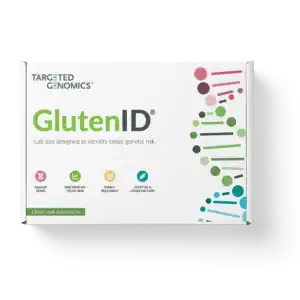
GlutenIDTM Celiac Genetic Home Test analyzes key genetic variants in the HLA-DQA1 and HLA-DQB1 genes to detect haplotypes (GlutenIDs) linked to varying levels of Celiac Disease risk. If no risk-associated GlutenIDsTM are found, the results indicate non-celiac genetics (NCG), helping individuals rule out genetic predisposition. This non-invasive home test provides valuable insights for those seeking proactive health management related to Celiac Disease.
Common Celiac Disease symptoms include bloating, gas, diarrhea, fatigue, skin rashes, anemia, delayed growth, and unexplained weight loss. Identifying these symptoms early, along with taking a Celiac Genetic Home Test like GlutenIDTM, can help determine your genetic predisposition and guide further diagnostic steps. For a deeper understanding of celiac symptoms, facts, and its history, visit our dedicated Celiac Disease information page.
In the kit you will find one saliva collection device, instructions, and a pre-paid mailer for sending your sample to the laboratory. GlutenIDTM uses the FDA-cleared ORAcollectDx saliva collection device. For more information visit the manufacturer’s website https://dnagenotek.com/US/pdf/PD-MSDS-00021.pdf
To view instructions on sample collection, please visit the page below:
To register your test, simply visit the page below:
To know more about the test, please visit the page below:
The GlutenIDTM Celiac Genetic Home Test uses qualitative genotyping to analyze specific genetic variants in saliva samples, helping to assess genetic risk for Celiac Disease. This test identifies clinically relevant markers in the HLA-DQA1 and HLA-DQB1 genes but does not diagnose the condition. Since different companies may analyze varying genetic markers, results may differ. Lifestyle and ethnicity can influence risk factors, and users should consult healthcare providers for interpretation. The test is not a substitute for clinical diagnosis or treatment decisions.
For important information and limitations regarding genetic health risk reports, visit this page.

American College of Gastroenterology (ACG) Practice Guidelines
for Celiac Disease (CD) Testing
(1) Patients with symptoms, signs, or laboratory evidence
suggestive of malabsorption (a digestive disorder that prevents your body
from effectively absorbing nutrients from your food) such as chronic diarrhea
with weight loss, abdominal pain, and bloating, should be tested for CD.
(2) Patients with a first-degree family member who has a
confirmed diagnosis of CD should be tested if they exhibit
possible signs or symptoms or laboratory evidence of CD.
(3) Consider testing of asymptomatic relatives with a first-degree
family member (parent, sibling, child) who has a confirmed diagnosis.
of CD.
4) HLA-DQ2/DQ8 genetic testing is recommended for first degree relatives
in celiac disease families to identify those at-risk and rule out celiac disease
in those whose testing is negative for DQ2/DQ8 genes.
We recommend consulting a genetic counselor— a healthcare professional specialized in inherited conditions such as Celiac Disease— to better understand your Celiac Genetic Home Test results. A counselor can help you and your family make informed decisions about diet and lifestyle based on your genetic risk. Consulting before and after testing ensures you fully grasp the benefits and limitations of genetic screening, providing clarity on the next steps for managing your health.
Ask your doctor to refer you to a genetic counselor or click here.
The only effective way to manage Celiac Disease is by adhering to a strict, lifelong gluten-free diet. Individuals diagnosed or at genetic risk should avoid foods and drinks containing gluten, a protein found in wheat, rye, and barley. Taking a Celiac Genetic Home Test like GlutenIDTM can help identify genetic predisposition, enabling proactive dietary adjustments. Understanding genetic risk allows individuals to take control of their health and prevent potential complications related to gluten exposure.